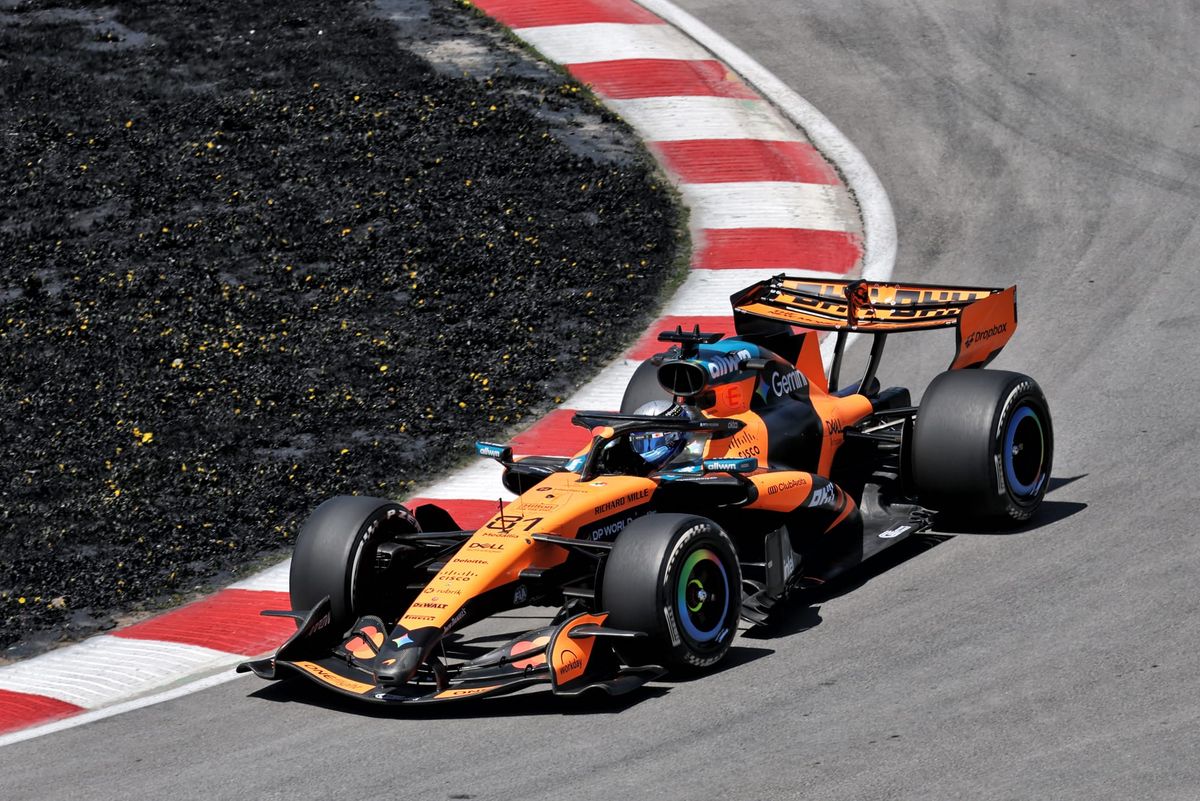
McLaren brought a significant front wing update to Montreal, part of a larger package introduced in Miami, but was forced to remove it. The new design featured increased inboard cord length and full-length flaps running directly into the endplate, alongside relocated active aero links. This complex redesign, however, proved problematic, specifically with airflow reattachment. Active aero systems require airflow to reattach rapidly – within 0.4 seconds – and the new wing struggled with this. Oscar Piastri’s engineer attributed his final chicane lock-up in practice directly to insufficient front downforce because airflow hadn’t reattached properly. McLaren reverted to the older specification for qualifying. The team also added a 'boomerang' on the halo, a subtle but important change to manage airflow around the driver and towards the rear wing. This setback highlights F1’s steep learning curve with active aero; consistency and balance remain paramount over raw downforce numbers.
Read the full story at The RaceGARY ANDERSON ON THE FRONT WING MCLAREN HAD TO REMOVE
McLaren brought a significant front wing update to Montreal, part of a larger package introduced in Miami, but was forced to remove it. The new design featured increased inboard cord length and full-length flaps running directly into the endplate, alongside relocated active aero links. This complex redesign, however, proved problematic, specifically with airflow reattachment. Active aero systems require airflow to reattach rapidly – within **0.4 seconds** – and the new wing struggled with this. Oscar Piastri’s engineer attributed his final chicane lock-up in practice directly to insufficient front downforce because airflow hadn’t reattached properly. McLaren reverted to the older specification for qualifying. The team also added a 'boomerang' on the halo, a subtle but important change to manage airflow around the driver and towards the rear wing. This setback highlights F1’s steep learning curve with active aero; consistency and balance remain paramount over raw downforce numbers.