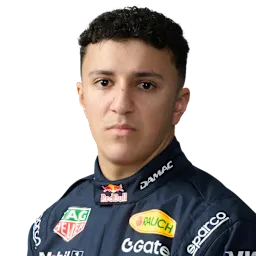
P13 in the drivers' championship after four rounds, four points on the board, and the kind of quiet start that tells you everything about how steep the climb gets when you graduate into a Red Bull seat. Isack Hadjar's 2026 was supposed to be the validation lap after a rookie campaign that earned him the promotion. Instead, it's looking like the orientation course the team's last several junior call-ups have all been forced to sit through.
Four points across four weekends is not a disaster, but it's not the Q3-regular, points-machine baseline a Red Bull driver is hired to deliver either. The car has consistently been a front-running tool over the last cycle, which makes the early-season scoreline less about machinery and more about a driver still calibrating to a chassis famous for punishing anyone who isn't its lead reference point. Every Red Bull arrival in recent memory — Gasly, Albon, Pérez in his late stretch, Lawson at the start of last year — has hit some version of this wall. Hadjar's introduction to it is following the script.
What's working in his favor: four rounds is a small sample, the points column isn't a zero, and the team has shown more patience this cycle than in some past ones. What isn't: the comparison to his garage-mate is unavoidable, the constructors' fight rewards consistency from both cars, and P13 in a top car is the kind of standings line that draws scrutiny fast in this paddock.
The next stretch is the read. If Hadjar can string together a clean qualifying-to-race weekend and convert into the top six with any regularity, the narrative resets quickly. If round eight looks like round four, the conversation around the second Red Bull seat — the conversation that never really stops — gets loud again. Watch the qualifying delta first. The rest follows from there.