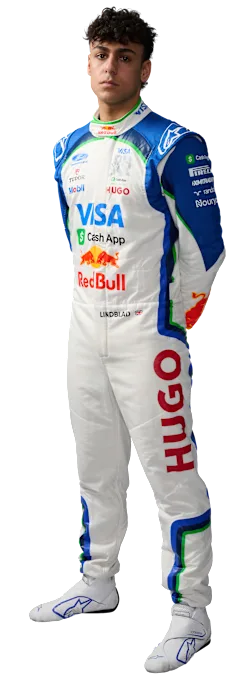
Arvid Lindblad sits outside the championship's top ten four rounds into his rookie F1 campaign, and that's the honest framing here. No points haul to wave around yet, no breakout drive that's forced its way into the headlines. For a teenager from the Red Bull pipeline dropped into the deep end of a regulation-reset season, that's neither a verdict nor a surprise. It's the baseline.
Racing Bulls remains what it has always been: the proving ground. The team exists to develop drivers for the senior Red Bull seat, and Lindblad arrived with that mandate stamped on his back. The 2026 rules package — new power units, active aero, recalibrated tire windows — has scrambled the order across the paddock, and rookies are pulling double duty, learning the car and the category at the same time. Four races in, every kid on this grid is essentially running a public R&D program.
Without recent coverage to lean on, the read on Lindblad has to come from context. Racing Bulls hasn't been a regular Q3 presence through the opening flyaways, which means the floor for points is narrow and the margins are unforgiving. A rookie in a midfield car needs the safety car, the strategic gamble, or a clean Sunday where the top teams trip over themselves. None of that has fallen his way through four rounds. The points table reflects circumstance as much as performance.
The watch items from here are straightforward. First, qualifying pace relative to his teammate — that's the internal benchmark that matters most to the Red Bull brain trust. Second, race-day tire management, the skill that separates juniors who stick from juniors who get cycled out. Third, whether he can convert a chaotic Sunday into his first Grand Prix points before the European swing settles the pecking order. The runway is still long. But in this program, it never feels that way.