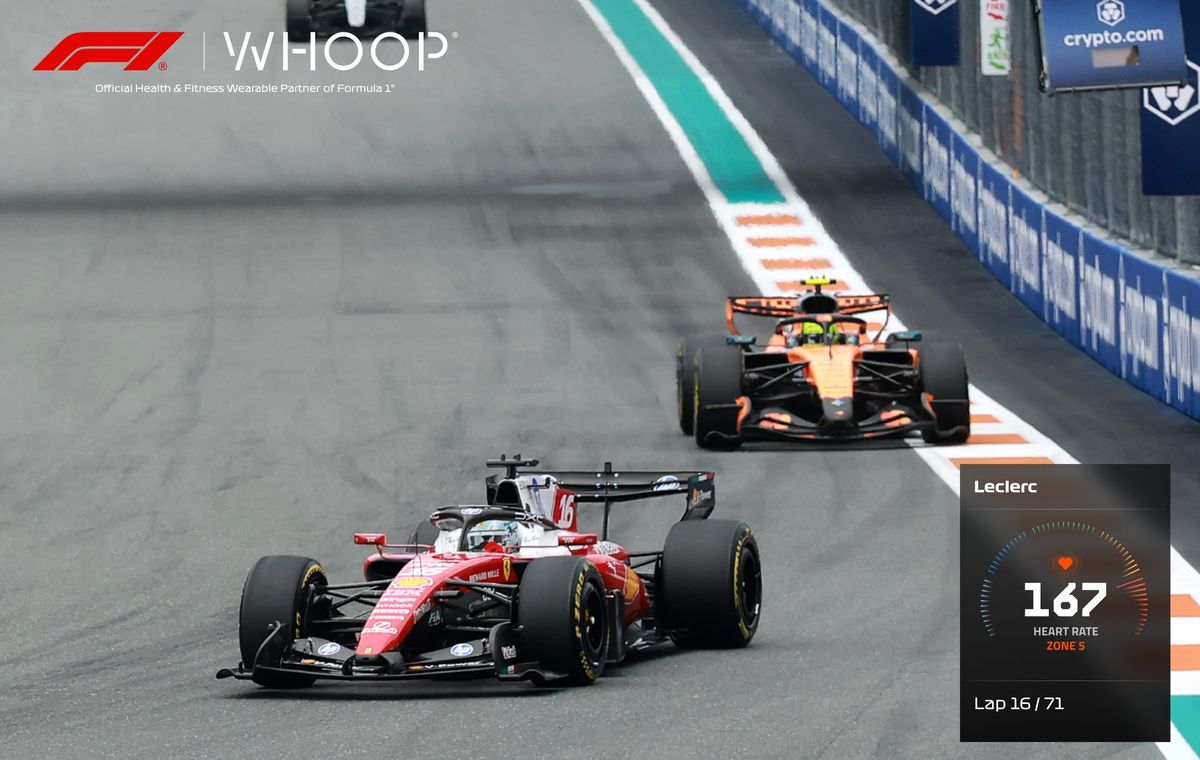
Formula 1 will pipe driver heart-rate data into broadcasts starting in 2027 through a partnership with Whoop, but Max Verstappen has already opted out. The reigning champion doesn't use wearables and won't share biometrics publicly. "I don't like to be tracked," he said. "I know when I'm tired."
George Russell accepted the plan but questioned its value. Heart rates vary wildly by age and individual physiology, he argued—Fernando Alonso's lower rate might look like ice-water calm when it's just a 45-year-old's baseline. "I'd empathize with a driver whose natural heart rate sits 20 beats higher than somebody else," Russell said.
Charles Leclerc, a Whoop ambassador, backed the initiative. The tech has appeared in F1 before—Ayrton Senna's heart rate aired during the 1994 Brazilian Grand Prix—but this marks the first systematic rollout. Drivers must opt in. Expect a split grid: data evangelists versus the Verstappen camp that sees no upside in turning biology into broadcast fodder.
Read the full story at The Race