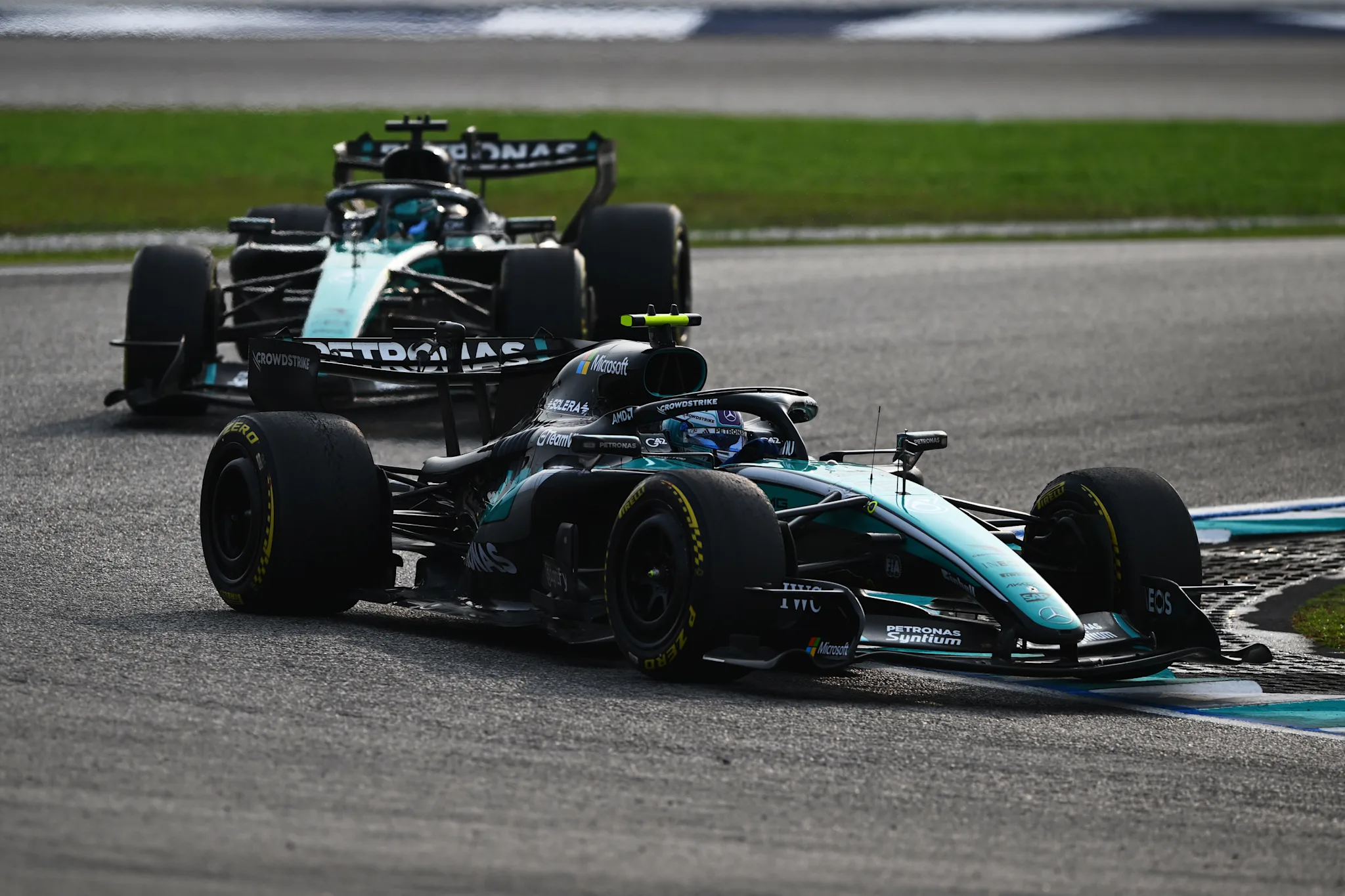
Mercedes' Sepang struggles ran deeper than tire temperatures. The W17 update package—revised floor and sidepods—showed promise in high-speed corners but fell apart in the slow stuff, forcing Russell and Antonelli to rotate the car on throttle rather than steering. Deputy TP Bradley Lord called it a "3D problem": the new aero interacting with Sepang's uniquely rough surface and brutal heat in ways the team couldn't untangle across one weekend.
The rough tarmac matters beyond tire deg. When the track surface has more texture, the airflow underneath the car changes—the boundary layer behaves differently, potentially triggering separation and killing the floor's efficiency. Teams model surface roughness in CFD and wind tunnels, but Sepang's nine-year absence left Mercedes working blind.
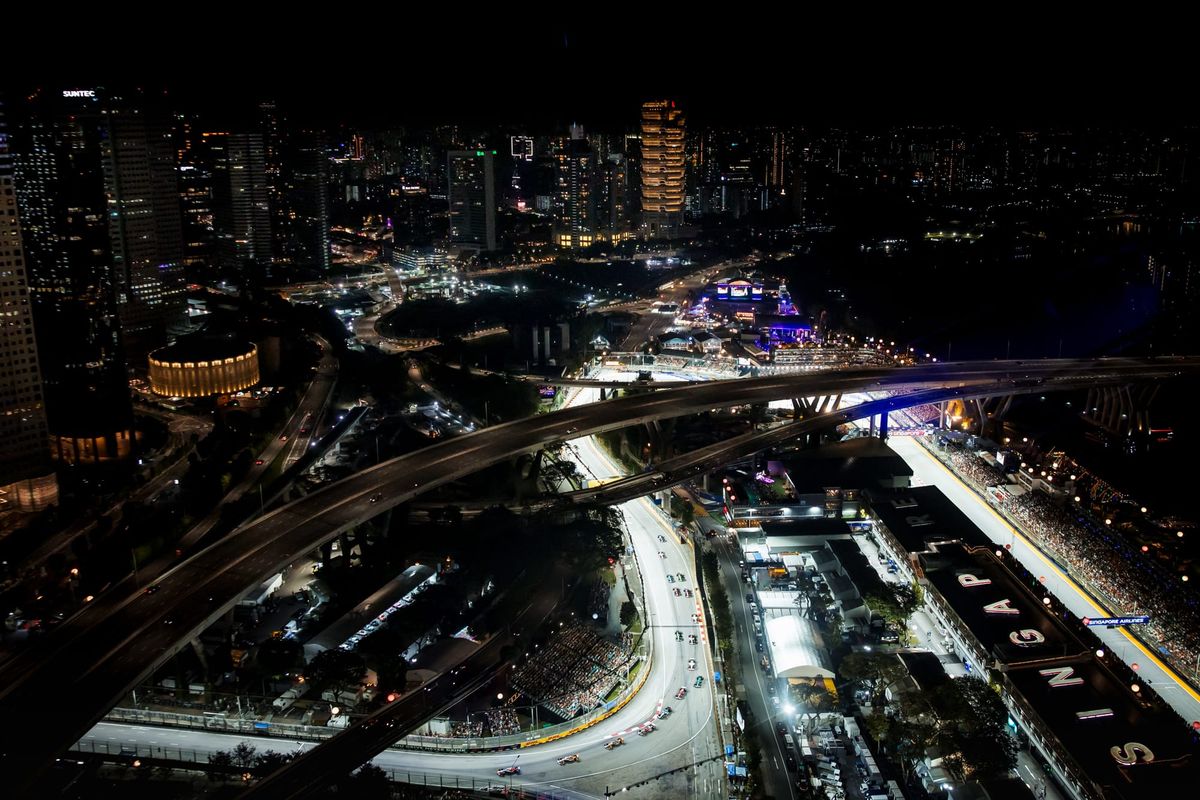
Russell's mechanical PU failure cost 15 points and a likely podium. Singapore's familiar data should give clearer answers on whether the update actually works or whether Mercedes just built a car that hates rough asphalt.
Read the full story at Motorsport.com